Showing posts with label #health. Show all posts

Saturday, March 30, 2024

Thirteen Years


📷 credit: Tumisu

Thirteen Years 


I had to be in 8th grade, sitting on the back patio with my younger brother as he taught me to inhale a cigarette. We grew up with a smoker (in the car, the bathroom, the kitchen, and the living room). A cloud of smoke was normal, and for a LONG time, I thought of it as a sign of fun and sophistication.


Thank the heavens, perspectives change.


For many years (nineteen, to be exact), I was a die-hard smoker. I mean, it was so "relaxing" anytime. There was nothing better than a smoke after a good meal, especially if wine and adult beverages were involved. Or in the morning with coffee. Enjoying a book. After sex. In the car. On a break from work. Getting ready for a night out. All the time.


I lit up for just about any reason and was one of those young 20-somethings who would roll into the gym parking lot with a cig hanging out of my mouth and then light one up before I pulled out of the parking lot afterward. 


For many years, I justified my smoking by telling myself I’d quit when it caught up to me physically. I mean, I made it to the gym five times a week. I was 'healthy." One day, I noticed the new lines around my mouth and under my eyes. My skin was dull. And then, I had to pause at the top of the stairs. 


For the following six months, I smoked in blinding denial of the damage and havoc I was inflicting on my sweet meat suit, my temple, my body, the only home I have. Until one day, I saw things clearly and my denial fell away.


That day was Saturday, March 19, 2011.


I’d just returned home to Arizona after meeting my youngest niece for the first time. This entailed a quick (long) roundtrip cross-country road trip with a husband and two dogs, none of whom traveled well in a not-so-large vehicle. 


Upon returning to my cozy ranch outside of Phoenix, I made sure all was well, and all creatures were accounted for before I toddled out to the patio with my bottle of wine, a pack of smokes, and a stack of gossip magazines to decompress from travel. 


That Saturday night, I devoured the magazines, polished off the wine, and inhaled half the pack. 


It was the last time I smoked a cigarette. 🚭


Between sheer willpower and support (data) from an app (ironic because I hate apps), I quit smoking cold turkey thirteen years ago. 


Not a single drag since, and by far one of my favorite decisions.


***Side note: I also ditched gossip magazines unless I’m flying. Then, the mindless flipping keeps my mind at bay during take-off when I often imagine the plane spontaneously combusting at 10,000 feet – the joy of anxiety and a writer’s imagination. ✈️


Also (more) noteworthy: What happens when someone kicks the habit? The effects of the health benefits begin immediately and last the rest of your life.


According to the American Cancer Society:


Within minutes of smoking your last cigarette, your body begins to recover:

20 minutes after quitting

Your heart rate and blood pressure drop.

A few days after quitting

The carbon monoxide level in your blood drops to normal.

2 weeks to 3 months after quitting

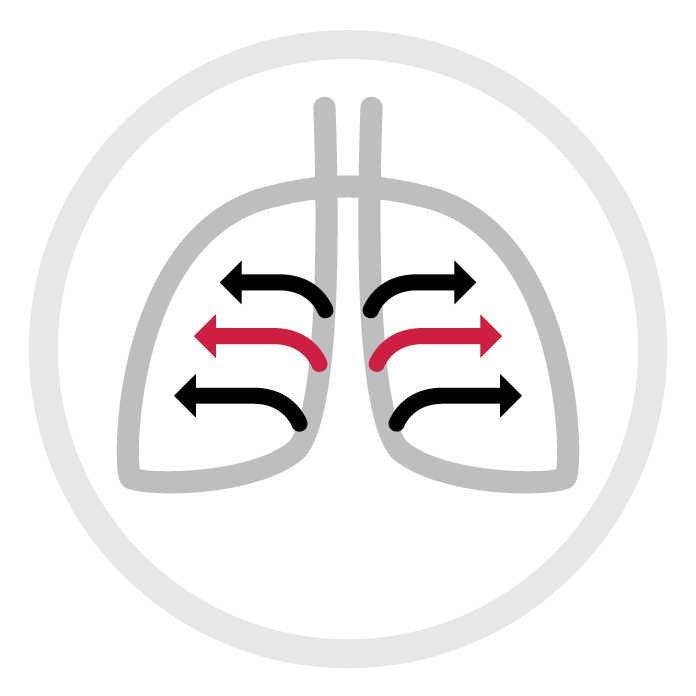
Your circulation improves and your lung function increases.

1 to 12 months after quitting

Coughing and shortness of breath decrease. Tiny hair-like structures (called cilia) that move mucus out of the lungs start to regain normal function, increasing their ability to handle mucus, clean the lungs, and reduce the risk of infection.

1 to 2 years after quitting

Your risk of heart attack drops dramatically.

5 to 10 years after quitting

Your risk of cancers of the mouth, throat, and voice box (larynx) is cut in half. Your stroke risk decreases.

10 years after quitting

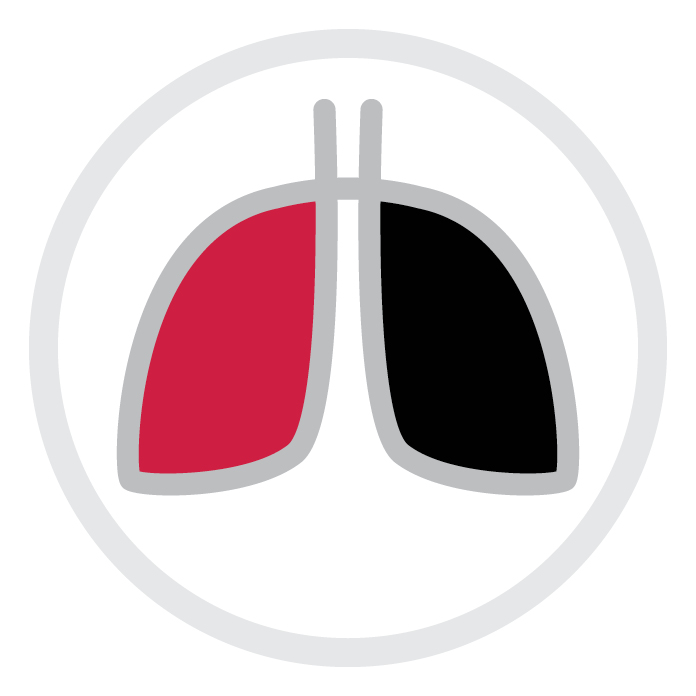
Your risk of lung cancer is about half that of a person who is still smoking (after 10 to 15 years). Your risk of cancer of the bladder, esophagus, and kidney decreases.

15 years after quitting

Your risk of coronary heart disease is close to that of a non-smoker.

These are just a few of the health benefits of quitting smoking for good, but there are others, too.

Quitting smoking lowers your risk of other cancers over time as well, including cancers of the stomach, pancreas, liver, cervix, and colon and rectum, as well as acute myeloid leukemia (AML).

Quitting also lowers your risk of diabetes, helps your blood vessels work better, and helps your heart and lungs.

Quitting smoking can also add as much as 10 years to your life, compared to if you continued to smoke. Quitting while you're younger can reduce your health risks more (for example, quitting before the age of 40 reduces the risk of dying from smoking-related disease by about 90%), but quitting at any age can give back years of life that would be lost by continuing to smoke.


Sadly, I remember puffing on and then eating those candy cigarettes when I was a kid –  a great idea to hook them young. I knew then that I would be a smoker. I also knew someday I would be a non-smoker. 


Thirteen years.


As always, thank you for stopping by. I’d love to hear your comments below. 


Until next time: Be creative. Find your wild side. Stay sane(ish). ✌️


Sunday, February 26, 2023

A Mental Musing: Benefits and Tips to Journaling (Guest Blog)

Journaling does wonders for me in a variety of ways. And I wish I'd devoted more time to it when I was younger. This week, I’m sharing a great article from a fellow blog. Yes, it’s geared toward students, but aren’t we all students in this crazy study of life? 


Thank you, Psychology Writing, for sharing your wisdom and tips! 


Be well. 💜

~Aspen


HomeBlog How to Start & Keep a Mental Health Journal – Tips for Students

How to Start & Keep a Mental Health Journal – Tips for Students

Author

PsychologyWriting

Dec 12th, 2022

8min read

When was the last time you wrote in your journal? Many people associate keeping a journal with their childhood and the old-fashioned cliche “Dear Diary…”. However, modern research has shown that journaling has numerous benefits for your mental and physical health. Writing in a diary can:

  • lower your anxiety,

  • improve your memory,

  • boost your immune system.

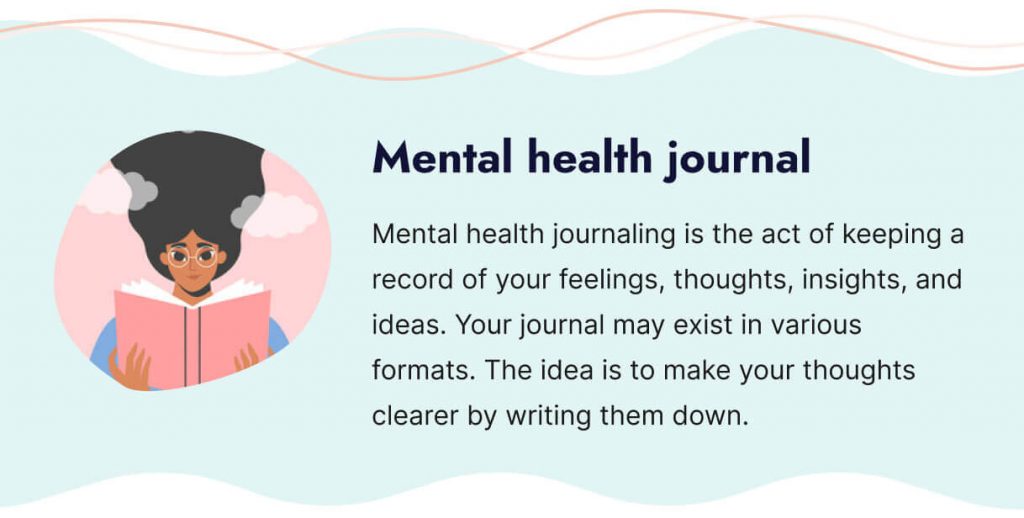
The picture contains a definition of mental health journaling.

If you happen to feel stuck, overwhelmed, or dissatisfied with your life, this is your sign that you need to start journaling now. In this article, we’ll discuss how journaling can be good for you — physically, mentally, and emotionally. Psychology Writing experts have also prepared some inspirational ideas for your mental health journal to overcome the fear of a blank page.

What Is a Mental Health Journal?

Mental health journaling is the act of keeping a record of your feelings, thoughts, insights, ideas, and more.

Your mental health journal may exist in many forms. It can be kept on paper or your computer, written or drawn. The idea behind the whole process is to make your thoughts clearer by getting them out.

Why Keep a Mental Health Journal?

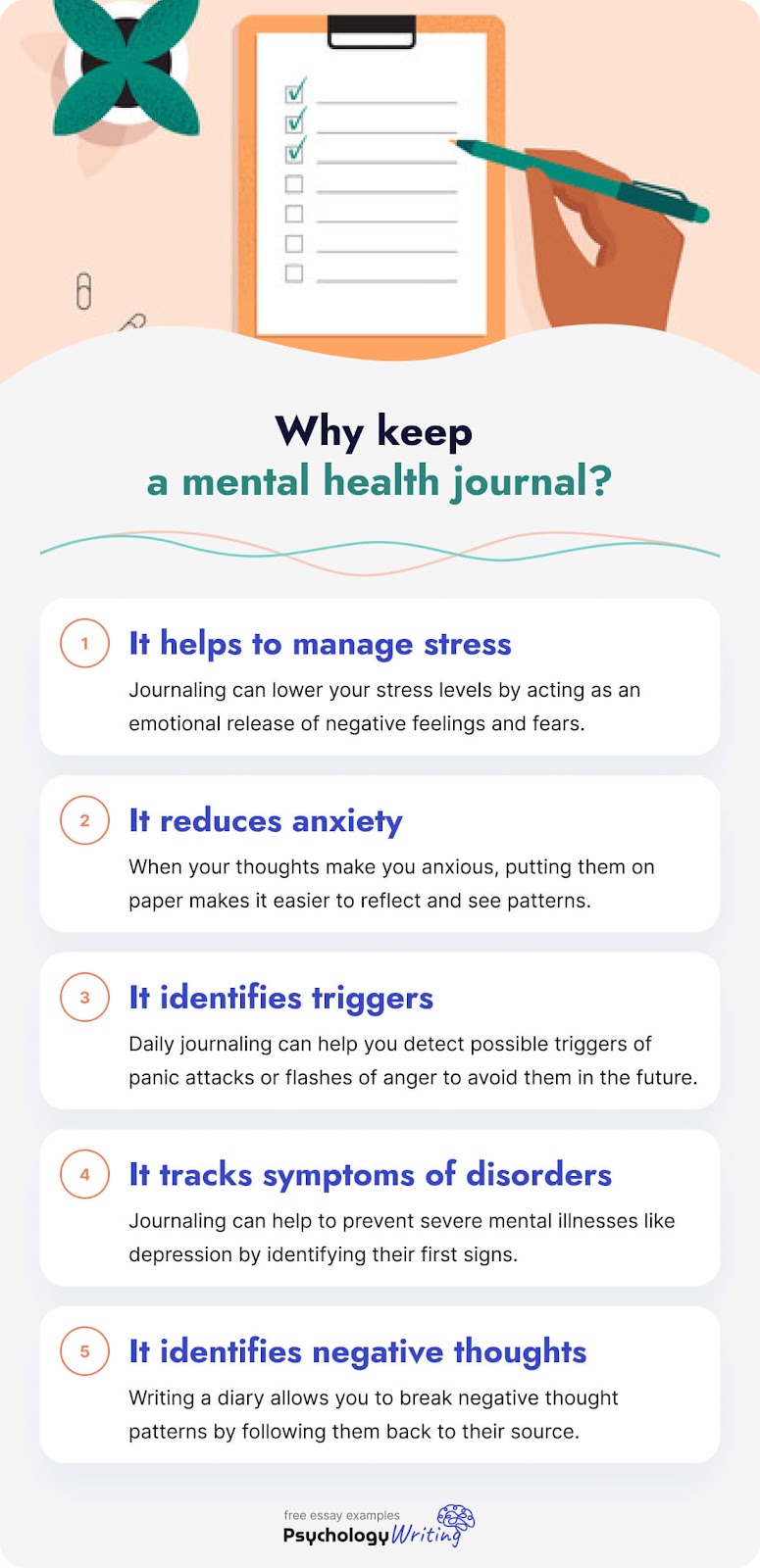
For some people journaling can be challenging especially as building new habits takes time and effort. However, a mental health journal can help you in many ways.

The picture lists the benefits of keeping a mental health journal.

Continue reading: How to Start & Keep a Mental Health Journal – Tips for Students

Thanks so much for stopping by!

Please feel free to share your thoughts on this week's Guest Blog.

Next week, I'll be back with something fresh and new.


~Aspen ✌️


Sunday, January 29, 2023

A Health Musing: Movement is Medicine

 And now for a nonfiction short…

📷credit: Thank you, Leonardo da Vinci and Pixabay Vector

Movement is Medicine

It was the late 80s, and I remember our two-story house as clear as day. Smack in the kitchen was a round yellow table. It was built into the home and attached to a desk and storage area. It was around that table everything changed. 

One day Dad came home from seeing a doctor, and life took a sharp turn down 2104 Healthy Ave. Suddenly dinners went from beef or pork to chicken, fish, and turkey burgers (they are NOT the same as beef burgers, especially for children under ten). All proteins went on the grill. It didn’t matter there was a -10 degree windchill; the grill was fired up and ready to cook healthy. We ripped out a large window, put in French doors, and extended the deck. To grill. To be healthy.

Breakfast shifted to a high-fiber cereal piled with wheat germ and then drowned in powdered milk (long before today’s vast choices of non-dairy). Thank goodness my brother and I didn’t have to endure the breakfast aspect of good health.  

And then, we cue the exercise. Yep, plop a loud whirling exercise bike in the living room. My Dad would ride that bike every night after work for at least 30 minutes. 

I didn’t understand it at the time and thought he was just a weird grown-up, but that was when he started taking his health very seriously. That was his precipice, and he jumped headlong into a commitment to a healthier lifestyle. In his 40s.  

Flash forward to today, in the second decade of the next century. Dad turned 84 at the beginning of 2023. He was also diagnosed with Parkinson’s Disease in the summer of 2021. 

Wait, I thought this was about health? Keep reading.

Parkinson’s is not a one size fits all shoe. In fact, it’s uniquely designed for each individual. Symptoms and experiences can be vastly different for every person who has it. This can make it more complicated to treat.

The majority of folks get a diagnosis in their 50s or 60s. Of course, it has been known to show up in those younger (30s-40s). What’s not so common is a diagnosis in your 80s. 

Dad’s diagnosis came much later than average, and his symptoms are on the milder side (thank the heavens). Why? His neurologist believes his choice to live a healthier life and exercise regularly staved off the onset of Parkinson’s Disease. 

Take a moment to reread that: His neurologist believes his movement/exercise/healthy habits staved off the onset of Parkinson’s Disease. 

Movement. Getting up. Exercising. My Dad didn’t run triathlons or enter the UFC ring. He got on an exercise bike for 30 minutes a day and lifted light weights. He also made better food choices and chose to actively live his life: traveling, learning, and enjoying entertainment.

At this point,  he is responding well to medications and needs moderate amounts of artificial dopamine, which is fantastic. And he still moves EVERY day. We are all very lucky he made himself and his health a priority all those years ago.

So why share this? To celebrate Dad. Duh.

But also to acknowledge the truth: We only get one body/mind combo. If we treat it right now, it WILL function better later. Movement is a key factor in that equation. 

One last thought: You know, when we’re kids, we think our parents have it all figured out, but once we become adults, we realize how little they knew. They were just figuring it all out as they went along, too, like we are NOW.  

My Gen X folks…this is us… my kind, handsome Dad was our age when he decided to make changes. Changes that likely gave him 20 years… twenty extra years. GOOD years with grandchildren and family and travel and friends and laughter.  

The final bottom line is: Movement is medicine. Get up.

The End

Recent(ish) Reads #3

  Welcome back! I appreciate you tuning in. Clearly, I’m terrible at keeping up with my own-self-created schedule. I can’t even pick a day o...